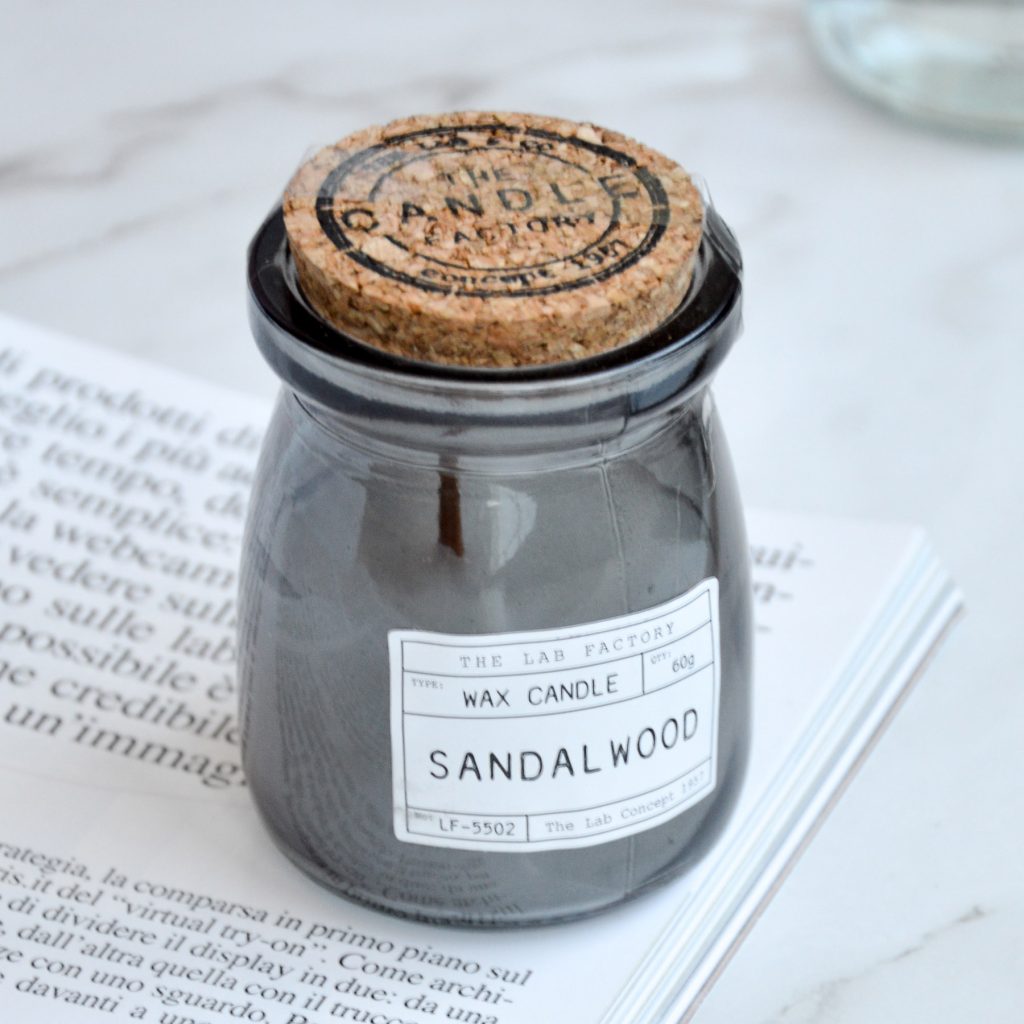
It was important that we gave this brand a timeless look.
Nullam id dolor id nibh ultricies vehicula ut id elit. Duis mollis, est non commodo luctus, nisi erat porttitor ligula, eget lacinia odio sem nec elit. Donec id elit non mi porta gravida at eget metus. Maecenas faucibus mollis interdum.
Fusce dapibus, tellus ac cursus commodo, tortor mauris condimentum nibh, ut fermentum massa justo sit amet risus. Vivamus sagittis lacus vel augue laoreet rutrum faucibus dolor auctor. Aenean lacinia bibendum nulla sed consectetur. Aenean eu leo quam. Pellentesque ornare sem lacinia quam venenatis vestibulum. Cum sociis natoque penatibus et magnis dis parturient montes, nascetur ridiculus mus.
Aenean lacinia bibendum nulla sed consectetur. Vestibulum id ligula porta felis euismod semper. Fusce dapibus, tellus ac cursus commodo, tortor mauris condimentum nibh, ut fermentum massa justo sit amet risus. Maecenas sed diam eget risus varius blandit sit amet non magna. Cras mattis consectetur purus sit amet fermentum.
Cum sociis natoque penatibus et magnis dis parturient montes, nascetur ridiculus mus. Vestibulum id ligula porta felis euismod semper. Nullam quis risus eget urna mollis ornare vel eu leo. Integer posuere erat a ante venenatis dapibus posuere velit aliquet. Nullam quis risus eget urna mollis ornare vel eu leo. Lorem ipsum dolor sit amet, consectetur adipiscing elit. Duis mollis, est non commodo luctus, nisi erat porttitor ligula, eget lacinia odio sem nec elit.
Sed posuere consectetur est at lobortis. Cum sociis natoque penatibus et magnis dis parturient montes, nascetur ridiculus mus. Maecenas faucibus mollis interdum. Sed posuere consectetur est at lobortis. Fusce dapibus, tellus ac cursus commodo, tortor mauris condimentum nibh, ut fermentum massa justo sit amet risus. Donec ullamcorper nulla non metus auctor fringilla. Aenean eu leo quam. Pellentesque ornare sem lacinia quam venenatis vestibulum.
Vivamus sagittis lacus vel augue laoreet rutrum faucibus dolor auctor. Donec id elit non mi porta gravida at eget metus. Maecenas faucibus mollis interdum. Curabitur blandit tempus porttitor. Donec sed odio dui. Morbi leo risus, porta ac consectetur ac, vestibulum at eros.
Donec ullamcorper nulla non metus auctor fringilla. Lorem ipsum dolor sit amet, consectetur adipiscing elit. Aenean eu leo quam. Pellentesque ornare sem lacinia quam venenatis vestibulum. Donec id elit non mi porta gravida at eget metus. Aenean eu leo quam. Pellentesque ornare sem lacinia quam venenatis vestibulum. Duis mollis, est non commodo luctus, nisi erat porttitor ligula, eget lacinia odio sem nec elit.
Donec sed odio dui. Integer posuere erat a ante venenatis dapibus posuere velit aliquet. Maecenas faucibus mollis interdum. Praesent commodo cursus magna, vel scelerisque nisl consectetur et. Cum sociis natoque penatibus et magnis dis parturient montes, nascetur ridiculus mus. Fusce dapibus, tellus ac cursus commodo, tortor mauris condimentum nibh, ut fermentum massa justo sit amet risus. Praesent commodo cursus magna, vel scelerisque nisl consectetur et.
Aenean lacinia bibendum nulla sed consectetur. Donec ullamcorper nulla non metus auctor fringilla. Integer posuere erat a ante venenatis dapibus posuere velit aliquet. Donec ullamcorper nulla non metus auctor fringilla. Etiam porta sem malesuada magna mollis euismod. Vivamus sagittis lacus vel augue laoreet rutrum faucibus dolor auctor. Praesent commodo cursus magna, vel scelerisque nisl consectetur et.
User testing for our new VR app.
Nullam id dolor id nibh ultricies vehicula ut id elit. Fusce dapibus, tellus ac cursus commodo, tortor mauris condimentum nibh, ut fermentum massa justo sit amet risus. Vivamus sagittis lacus vel augue laoreet rutrum faucibus dolor auctor. Duis mollis, est non commodo luctus, nisi erat porttitor ligula, eget lacinia odio sem nec elit.
Maecenas faucibus mollis interdum. Vestibulum id ligula porta felis euismod semper. Morbi leo risus, porta ac consectetur ac, vestibulum at eros. Donec ullamcorper nulla non metus auctor fringilla. Vivamus sagittis lacus vel augue laoreet rutrum faucibus dolor auctor.
Cras mattis consectetur purus sit amet fermentum. Donec id elit non mi porta gravida at eget metus. Donec id elit non mi porta gravida at eget metus. Aenean lacinia bibendum nulla sed consectetur. Maecenas faucibus mollis interdum. Donec sed odio dui. Aenean lacinia bibendum nulla sed consectetur.
The Nautilus was steadily pursuing its southerly course, following the fiftieth meridian with considerable speed. Did he wish to reach the pole? I did not think so, for every attempt to reach that point had hitherto failed. Again, the season was far advanced, for in the Antarctic regions the 13th of March corresponds with the 13th of September of northern regions, which begin at the equinoctial season. On the 14th of March I saw floating ice in latitude 55°, merely pale bits of debris from twenty to twenty-five feet long, forming banks over which the sea curled. The Nautilus remained on the surface of the ocean. Ned Land, who had fished in the Arctic Seas, was familiar with its icebergs; but Conseil and I admired them for the first time. In the atmosphere towards the southern horizon stretched a white dazzling band. English whalers have given it the name of “ice blink.” However thick the clouds may be, it is always visible, and announces the presence of an ice pack or bank. Accordingly, larger blocks soon appeared, whose brilliancy changed with the caprices of the fog. Some of these masses showed green veins, as if long undulating lines had been traced with sulphate of copper; others resembled enormous amethysts with the light shining through them. Some reflected the light of day upon a thousand crystal facets. Others shaded with vivid calcareous reflections resembled a perfect town of marble. The more we neared the south the more these floating islands increased both in number and importance.
At 60° lat. every pass had disappeared. But, seeking carefully, Captain Nemo soon found a narrow opening, through which he boldly slipped, knowing, however, that it would close behind him. Thus, guided by this clever hand, the Nautilus passed through all the ice with a precision which quite charmed Conseil; icebergs or mountains, ice-fields or smooth plains, seeming to have no limits, drift-ice or floating ice-packs, plains broken up, called palchs when they are circular, and streams when they are made up of long strips. The temperature was very low; the thermometer exposed to the air marked 2 deg. or 3° below zero, but we were warmly clad with fur, at the expense of the sea-bear and seal. The interior of the Nautilus, warmed regularly by its electric apparatus, defied the most intense cold. Besides, it would only have been necessary to go some yards beneath the waves to find a more bearable temperature. Two months earlier we should have had perpetual daylight in these latitudes; but already we had had three or four hours of night, and by and by there would be six months of darkness in these circumpolar regions. On the 15th of March we were in the latitude of New Shetland and South Orkney. The Captain told me that formerly numerous tribes of seals inhabited them; but that English and American whalers, in their rage for destruction, massacred both old and young; thus, where there was once life and animation, they had left silence and death.
About eight o’clock on the morning of the 16th of March the Nautilus, following the fifty-fifth meridian, cut the Antarctic polar circle. Ice surrounded us on all sides, and closed the horizon. But Captain Nemo went from one opening to another, still going higher. I cannot express my astonishment at the beauties of these new regions. The ice took most surprising forms. Here the grouping formed an oriental town, with innumerable mosques and minarets; there a fallen city thrown to the earth, as it were, by some convulsion of nature. The whole aspect was constantly changed by the oblique rays of the sun, or lost in the greyish fog amidst hurricanes of snow. Detonations and falls were heard on all sides, great overthrows of icebergs, which altered the whole landscape like a diorama. Often seeing no exit, I thought we were definitely prisoners; but, instinct guiding him at the slightest indication, Captain Nemo would discover a new pass. He was never mistaken when he saw the thin threads of bluish water trickling along the ice-fields; and I had no doubt that he had already ventured into the midst of these Antarctic seas before. On the 16th of March, however, the ice-fields absolutely blocked our road. It was not the iceberg itself, as yet, but vast fields cemented by the cold. But this obstacle could not stop Captain Nemo: he hurled himself against it with frightful violence. The Nautilus entered the brittle mass like a wedge, and split it with frightful crackings. It was the battering ram of the ancients hurled by infinite strength. The ice, thrown high in the air, fell like hail around us. By its own power of impulsion our apparatus made a canal for itself; some times carried away by its own impetus, it lodged on the ice-field, crushing it with its weight, and sometimes buried beneath it, dividing it by a simple pitching movement, producing large rents in it. Violent gales assailed us at this time, accompanied by thick fogs, through which, from one end of the platform to the other, we could see nothing. The wind blew sharply from all parts of the compass, and the snow lay in such hard heaps that we had to break it with blows of a pickaxe. The temperature was always at 5 deg. below zero; every outward part of the Nautilus was covered with ice. A rigged vessel would have been entangled in the blocked up gorges. A vessel without sails, with electricity for its motive power, and wanting no coal, could alone brave such high latitudes. At length, on the 18th of March, after many useless assaults, the Nautilus was positively blocked. It was no longer either streams, packs, or ice-fields, but an interminable and immovable barrier, formed by mountains soldered together.
Sed posuere consectetur est at lobortis. Etiam porta sem malesuada magna mollis euismod. Vestibulum id ligula porta felis euismod semper. Etiam porta sem malesuada magna mollis euismod. Nulla vitae elit libero, a pharetra augue. Maecenas faucibus mollis interdum. Cras justo odio, dapibus ac facilisis in, egestas eget quam.
Maecenas faucibus mollis interdum. Cum sociis natoque penatibus et magnis dis parturient montes, nascetur ridiculus mus.
Maecenas faucibus mollis interdum. Donec id elit non mi porta gravida at eget metus. Maecenas sed diam eget risus varius blandit sit amet non magna. Cras justo odio, dapibus ac facilisis in, egestas eget quam. Donec id elit non mi porta gravida at eget metus.
Lorem ipsum dolor sit amet, consectetur adipiscing elit. Aenean lacinia bibendum nulla sed consectetur. Maecenas sed diam eget risus varius blandit sit amet non magna. Aenean lacinia bibendum nulla sed consectetur. Morbi leo risus, porta ac consectetur ac, vestibulum at eros.
Etiam porta sem malesuada magna mollis euismod. Nullam quis risus eget urna mollis ornare vel eu leo. Cras justo odio, dapibus ac facilisis in, egestas eget quam. Cras justo odio, dapibus ac facilisis in, egestas eget quam. Duis mollis, est non commodo luctus, nisi erat porttitor ligula, eget lacinia odio sem nec elit. Cras mattis consectetur purus sit amet fermentum. Nulla vitae elit libero, a pharetra augue.
For no monarchy is so absolute, but it is circumscribed with laws; but when the executive power is in the law-makers, there is no further check upon them; and the people must suffer without a remedy, because they are oppressed by their representatives. If I must serve, the number of my masters, who were born my equals, would but add to the ignominy of my bondage. The nature of our government, above all others, is exactly suited both to the situation of our country, and the temper of the natives; an island being more proper for commerce and for defence, than for extending its dominions on the Continent; for what the valour of its inhabitants might gain, by reason of its remoteness, and the casualties of the seas, it could not so easily preserve: And, therefore, neither the arbitrary power of One, in a monarchy, nor of Many, in a commonwealth, could make us greater than we are.
Both my nature, as I am an Englishman, and my reason, as I am a man, have bred in me a loathing to that specious name of a republic; that mock appearance of a liberty.
It is true, that vaster and more frequent taxes might be gathered, when the consent of the people was not asked or needed; but this were only by conquering abroad, to be poor at home; and the examples of our neighbours teach us, that they are not always the happiest subjects, whose kings extend their dominions farthest. Since therefore we cannot win by an offensive war, at least, a land war, the model of our government seems naturally contrived for the defensive part; and the consent of a people is easily obtained to contribute to that power which must protect it. Felices nimium, bona si sua norint, Angligenae! And yet there are not wanting malcontents among us, who, surfeiting themselves on too much happiness, would persuade the people that they might be happier by a change. It was indeed the policy of their old forefather, when himself was fallen from the station of glory, to seduce mankind into the same rebellion with him, by telling him he might yet be freer than he was; that is more free than his nature would allow, or, if I may so say, than God could make him. We have already all the liberty which freeborn subjects can enjoy, and all beyond it is but licence.
But if it be liberty of conscience which they pretend, the moderation of our church is such, that its practice extends not to the severity of persecution; and its discipline is withal so easy, that it allows more freedom to dissenters than any of the sects would allow to it. In the meantime, what right can be pretended by these men to attempt innovation in church or state?
—John Dryden
Who made them the trustees, or to speak a little nearer their own language, the keepers of the liberty of England? If their call be extraordinary, let them convince us by working miracles; for ordinary vocation they can have none, to disturb the government under which they were born, and which protects them. He who has often changed his party, and always has made his interest the rule of it, gives little evidence of his sincerity for the public good; it is manifest he changes but for himself, and takes the people for tools to work his fortune. Yet the experience of all ages might let him know, that they who trouble the waters first, have seldom the benefit of the fishing; as they who began the late rebellion enjoyed not the fruit of their undertaking, but were crushed themselves by the usurpation of their own instrument.
Neither is it enough for them to answer, that they only intend a reformation of the government, but not the subversion of it: on such pretence all insurrections have been founded; it is striking at the root of power, which is obedience. Every remonstrance of private men has the seed of treason in it; and discourses, which are couched in ambiguous terms, are therefore the more dangerous, because they do all the mischief of open sedition, yet are safe from the punishment of the laws. These, my lord, are considerations, which I should not pass so lightly over, had I room to manage them as they deserve; for no man can be so inconsiderable in a nation, as not to have a share in the welfare of it; and if he be a true Englishman, he must at the same time be fired with indignation, and revenge himself as he can on the disturbers of his country. And to whom could I more fitly apply myself than to your lordship, who have not only an inborn, but an hereditary loyalty? The memorable constancy and sufferings of your father, almost to the ruin of his estate, for the royal cause, were an earnest of that which such a parent and such an institution would produce in the person of a son.
But so unhappy an occasion of manifesting your own zeal, in suffering for his present majesty, the providence of God, and the prudence of your administration, will, I hope, prevent; that, as your father’s fortune waited on the unhappiness of his sovereign, so your own may participate of the better fate which attends his son. The relation which you have by alliance to the noble family of your lady, serves to confirm to you both this happy augury. For what can deserve a greater place in the English chronicle, than the loyalty and courage, the actions and death, of the general of an army, fighting for his prince and country? The honour and gallantry of the Earl of Lindsey is so illustrious a subject, that it is fit to adorn an heroic poem; for he was the protomartyr of the cause, and the type of his unfortunate royal master.
It is indeed their interest, who endeavour the subversion of governments, to discourage poets and historians; for the best which can happen to them, is to be forgotten. But such who, under kings, are the fathers of their country, and by a just and prudent ordering of affairs preserve it, have the same reason to cherish the chroniclers of their actions, as they have to lay up in safety the deeds and evidences of their estates; for such records are their undoubted titles to the love and reverence of after ages. Your lordship’s administration has already taken up a considerable part of the English annals; and many of its most happy years are owing to it. His Majesty, the most knowing judge of men, and the best master, has acknowledged the ease and benefit he receives in the incomes of his treasury, which you found not only disordered, but exhausted. All things were in the confusion of a chaos, without form or method, if not reduced beyond it, even to annihilation; so that you had not only to separate the jarring elements, but (if that boldness of expression might be allowed me) to create them.
Your enemies had so embroiled the management of your office, that they looked on your advancement as the instrument of your ruin.
John Bryden
And as if the clogging of the revenue, and the confusion of accounts, which you found in your entrance, were not sufficient, they added their own weight of malice to the public calamity, by forestalling the credit which should cure it. Your friends on the other side were only capable of pitying, but not of aiding you; no further help or counsel was remaining to you, but what was founded on yourself; and that indeed was your security; for your diligence, your constancy, and your prudence, wrought most surely within, when they were not disturbed by any outward motion. The highest virtue is best to be trusted with itself; for assistance only can be given by a genius superior to that which it assists; and it is the noblest kind of debt, when we are only obliged to God and nature. This then, my lord, is your just commendation, and that you have wrought out yourself a way to glory, by those very means that were designed for your destruction: You have not only restored but advanced the revenues of your master, without grievance to the subject; and, as if that were little yet, the debts of the exchequer, which lay heaviest both on the crown, and on private persons, have by your conduct been established in a certainty of satisfaction.
This is an example of a Gutenberg block.
An action so much the more great and honourable, because the case was without the ordinary relief of laws; above the hopes of the afflicted and beyond the narrowness of the treasury to redress, had it been managed by a less able hand. It is certainly the happiest, and most unenvied part of all your fortune, to do good to many, while you do injury to none; to receive at once the prayers of the subject, and the praises of the prince; and, by the care of your conduct, to give him means of exerting the chiefest (if any be the chiefest) of his royal virtues, his distributive justice to the deserving, and his bounty and compassion to the wanting. The disposition of princes towards their people cannot be better discovered than in the choice of their ministers; who, like the animal spirits betwixt the soul and body, participate somewhat of both natures, and make the communication which is betwixt them.
A king, who is just and moderate in his nature, who rules according to the laws, whom God has made happy by forming the temper of his soul to the constitution of his government, and who makes us happy, by assuming over us no other sovereignty than that wherein our welfare and liberty consists; a prince, I say, of so excellent a character, and so suitable to the wishes of all good men, could not better have conveyed himself into his people’s apprehensions, than in your lordship’s person; who so lively express the same virtues, that you seem not so much a copy, as an emanation of him. Moderation is doubtless an establishment of greatness; but there is a steadiness of temper which is likewise requisite in a minister of state; so equal a mixture of both virtues, that he may stand like an isthmus betwixt the two encroaching seas of arbitrary power, and lawless anarchy. The undertaking would be difficult to any but an extraordinary genius, to stand at the line, and to divide the limits; to pay what is due to the great representative of the nation, and neither to enhance, nor to yield up, the undoubted prerogatives of the crown. These, my lord, are the proper virtues of a noble Englishman, as indeed they are properly English virtues; no people in the world being capable of using them, but we who have the happiness to be born under so equal, and so well-poised a government;—a government which has all the advantages of liberty beyond a commonwealth, and all the marks of kingly sovereignty, without the danger of a tyranny.
During all the great periods of art able men have striven earnestly to attain a knowledge of character and beauty and to achieve their truthful representation. Even when the purpose of the artist has been to express some specific idea or to record some incident or historical event, the work has lived, not because of the idea conveyed or the interest which attaches to the subject, but because it has portrayed character in a powerful manner, or because it has expressed the qualities of beauty which are inherent in nature. Upon these qualities, as they have been understood and translated by the artist, has depended the life of every great painting and work of sculpture. I believe this to be a fundamental and far reaching truth, accepted almost universally by painters and sculptors. This, I know, is equivalent to saying that the chief value of a work of art lies in its power to give aesthetic pleasure.
These observations may suggest a question as to the relative importance of a work of art which tells a story or records historical events as compared with one which appeals solely to the aesthetic sense or the love of beauty. Human language, it would seem to me, is the logical method for conveying thought from one mind to another and offers direct, untrammelled mental contact without the intervention of form or design of any kind, while the representation of beauty for beauty’s sake alone is the more direct and effective way of creating and stimulating in the human heart a love of nature and art.
This, however, is not the question considered in this work. The question raised is simply this:
Has the artist, in representing the evanescent effects of nature, the manifold beauties and harmonies with which we are surrounded in this world, or predominant character as expressed by man, exceeded nature either by virtue of his exceptional power or as a result of any personal quality which he may impart to the work?
It is also manifestly true that the greatness of a work of art must depend upon the mental power of the artist, that power which enables him to apprehend or discover the essential qualities existing in nature. It is equally true that every artist, even though wholly absorbed in the effort to reveal the truth and beauty which exist in nature, expresses in some degree his own personality. He does this inevitably, first, by the type of subject he chooses to study and represent, and, second, but in a less important degree, by the technical manner employed. This is, of course, well understood by every one. It is not for a moment disputed. But beyond and above this personal expression stands, as the chief and highest purpose of the artist, the representation of truth and character as these do actually exist.
This is an example of a video within a Gutenberg block.
While the painter has used his art to record history, to tell stories, and to express emotions and convictions, his chief mission is to extract from nature her many beautiful forms and harmonies and to present these in pleasing fashion. In this way the artisan, drawing upon the great multitude of beautiful forms and colours exhibited by nature and so lavishly spread everywhere in the animal and plant creations, cunningly fashions patterns and combinations, weaving these into rugs and adapting them to the many beautiful objects with which we are familiar.
Notwithstanding these accepted facts, I am convinced that the great works of the painter and sculptor, those of supreme importance, rest not upon any of these devices or expressions of art, but upon the faithful, unerring and masterly representation of character and beauty as these do actually exist. The masterpieces of art as they live today in the national art galleries of the world establish this fact. They seem to possess a common factor without regard to subject or period which unites in a common family the great paintings of the entire history of art. This factor I believe to be the quality of truth. These great works owe their existence to the fact that they faithfully represent some great outstanding type, or because they truthfully reveal the characteristic and essential beauty of nature expressed in one of her many moods. They are important just in proportion as their masters have understood these qualities and recorded their impressions on canvas and in marble.
Aubé is another sculptor of acknowledged eminence who ranges himself with M. Rodin in his opposition to the Institute. His figures of "Bailly" and "Dante" are very fine, full of a most impressive dignity in the ensemble, and marked by the most vigorous kind of modelling. One may easily like his "Gambetta" less. But for years Rodin's only eminent fellow sculptor was Dalou. Perhaps his protestantism has been less pronounced than M. Rodin's. It was certainly long more successful in winning both the connoisseur and the public. The state itself, which is now and then even more conservative than the Institute, has charged him with important works, and the Salon has given him its highest medal. And he was thus recognized long before M. Rodin's works had risen out of the turmoil of critical contention to their present envied if not cordially approved eminence. But for being less energetic, less absorbed, less intense than M. Rodin's, M. Dalou's enthusiasm for nature involves a scarcely less uncompromising dislike of convention. He had no success at the École des Beaux Arts. Unlike Rodin, he entered those precincts and worked long within them, but never sympathetically or felicitously.
The rigor of academic precept was from the first excessively distasteful to his essentially and eminently romantic nature. He chafed incessantly. The training doubtless stood him in good stead when he found himself driven by hard necessity into commercial sculpture, into that class of work which is on a very high plane for its kind in Paris, but for which the manufacturer rather than the designer receives the credit. But he probably felt no gratitude to it for this, persuaded that but for its despotic prevalence there would have been a clearer field for his spontaneous and agreeable effort to win distinction in. He greatly preferred at this time the artistic anarchy of England, whither he betook himself after the Commune—not altogether upon compulsion, but by prudence perhaps; for like Rodin, his birth, his training, his disposition, his ideas, have always been as liberal and popular in politics as in art, and in France a man of any sincerity and dignity of character has profound political convictions, even though his profession be purely æsthetic. In England he was very successful both at the Academy and with the amateurs of the aristocracy, of many of whom he made portraits, besides finding ready purchasers among them for his imaginative works. The list of these latter begins, if we except some delightful decoration for one of the Champs-Élysées palaces, with a statue called "La Brodeuse," which won for him a medal at the Salon of 1870. Since then his production has been prodigious in view of its originality, of its lack of the powerful momentum extraneously supplied to the productive force that follows convention and keeps in the beaten track.
His numerous peasant subjects at one time led to comparison of him with Millet, but the likeness is of the most superficial kind. There is no spiritual kinship whatever between him and Millet.
Dalou models the Marquis de Dreux-Brézé with as much zest as he does his "Boulonnaise allaitant son enfant;" his touch is as sympathetic in his Rubens-like "Silenus" as in his naturalistic "Berceuse." Furthermore, there is absolutely no note of melancholy in his realism—which, at the present time, is a point well worth noting. His vivacity excludes the pathetic. Traces of Carpeaux's influence are plain in his way of conceiving such subjects as Carpeaux would have handled. No one could have come so closely into contact with that vigorous individuality without in some degree undergoing its impress, without learning to look for the alert and elegant aspects of his model, whatever it might be. But with Carpeaux's distinction Dalou has more poise. He is considerably farther away from the rococo. His ideal is equally to be summarized in the word Life, but he cares more for its essence, so to speak, than for its phenomena, or at all events manages to make it felt rather than seen. One perceives that humanity interests him on the moral side, that he is interested in its significance as well as its form. Accordingly with him the movement illustrates the form, which is in its turn truly expressive, whereas occasionally, so bitter was his disgust with the pedantry of the schools, with Carpeaux the form is used to exhibit movement. Then, too, M. Dalou has a certain nobility which Carpeaux's vivacity is a shade too animated to reach. Motive and treatment blend in a larger sweep. The graver substance follows the planes and lines of a statelier if less brilliant style. It has, in a word, more style.
I can find no exacter epithet, on the whole, for Dalou's large distinction, and conscious yet sober freedom, than the word Venetian. There is some subtle phrenotype that associates him with the great colorists. His work is, in fact, full of color, if one may trench on the jargon of the studios.
It has the sumptuousness of Titian and Paul Veronese. Its motives are cast in the same ample mould. Many of his figures breathe the same air of high-born ease and well-being, of serene and not too intellectual composure. There is an aristocratic tincture even in his peasants—a kind of native distinction inseparable from his touch. And in his women there is a certain gracious sweetness, a certain exquisite and elusive refinement elsewhere caught only by Tintoretto, but illustrated by Tintoretto with such penetrating intensity as to leave perhaps the most nearly indelible impression that the sensitive amateur carries away with him from Venice. The female figures in the colossal group which should have been placed in the Place de la République, but was relegated by official stupidity to the Place des Nations, are examples of this patrician charm in carriage, in form, in feature, in expression. They have not the witchery, the touch of Bohemian sprightliness that make such figures as Carpeaux's "Flora" so enchanting, but they are at once sweeter and more distinguished. The sense for the exquisite which this betrays excludes all dross from M. Dalou's rich magnificence. Even the "Silenus" group illustrates exuberance without excess: I spoke of it just now as Rubens-like, but it is only because it recalls Rubens's superb strength and riotous fancy; it is in reality a Rubens-like motive purged in the execution of all Flemish grossness. There is even in Dalou's fantasticality of this sort a measure and distinction which temper animation into resemblance to such delicate blitheness as is illustrated by the Bargello "Bacchus" of Jacopo Sansovino. Sansovino afterward, by the way, amid the artificiality of Venice, whither he went, wholly lost his individual force, as M. Dalou, owing to his love of nature, is less likely to do. But his sketch for a monument to Victor Hugo, and perhaps still more his memorial of Delacroix in the Luxembourg Gardens, point warningly in this direction, and it would perhaps be easier than he supposes to permit his extraordinary decorative facility to lead him on to execute works unpenetrated by personal feeling, and recalling less the acme of the Renaissance than the period just afterward, when original effort had exhausted itself and the movement of art was due mainly to momentum—when, as in France at the present moment, the enormous mass of artistic production really forced pedantry upon culture, and prevented any but the most strenuous personalities from being genuine, because of the immensely increased authoritativeness of what had become classic.